That shift says something important about modern audiences. People are no longer simply consuming content. They are assessing it, questioning it, and quietly deciding whether they believe the people behind it. Increasingly, imperfect video is winning that decision.
Polish Can Create Distance
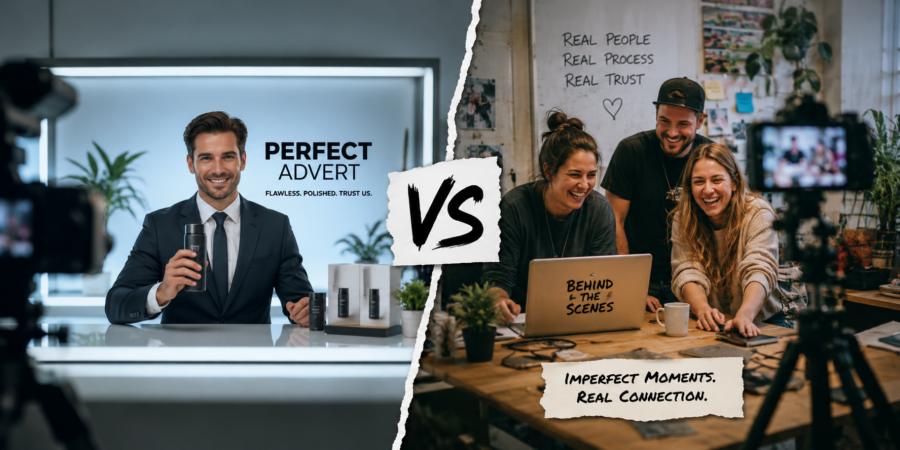
Highly produced advertising still has its place. A crisp product launch, a cinematic brand film, or a carefully edited campaign can communicate professionalism and ambition. But too much polish can also make viewers suspicious. When every sentence sounds approved by seven departments and one nervous legal adviser, the result can feel less like communication and more like corporate origami.Audiences know when they are being sold to. They notice the flawless lighting, the immaculate background, the heroic music, and the person pretending to casually enjoy software while standing beside a suspiciously clean desk. None of these things are wrong by themselves, but together they can create a barrier. The viewer may admire the production without trusting the message.
Imperfect video lowers that barrier. A real laugh, a pause before answering, a glimpse of the workspace, or a small unscripted moment can make the people on screen feel reachable. It reminds viewers that there are actual humans behind the brand, not just a logo wearing a blazer.
Authenticity Has Become a Practical Advantage
Trust is not built by looking perfect. It is built by seeming honest, consistent, and understandable. That is why behind-the-scenes footage, informal explainers, staff interviews, and day-in-the-life videos often perform so well. They show process, not just outcome. They let people see how something is made, who is involved, and what the organisation actually cares about when nobody appears to be standing in front of a smoke machine.For brands, creators, and organisations, this matters because people want evidence. They want to see the workshop, the planning, the mistakes, the problem-solving, and the small decisions that shape the finished result. A polished advert says, “Look how good we are.” An honest video says, “Here is how we work.” The second one often feels more believable because it gives the audience something to judge for themselves.
That does not mean quality should be thrown into a skip while someone films vertically with one hand and eats crisps with the other. Imperfect does not mean careless. The most effective authentic videos still have clear sound, a useful point, and enough structure to keep people watching. The roughness should feel human, not accidental in the way a dropped laptop feels accidental.
Human Moments Beat Scripted Perfection
One reason imperfect video works is that people are very good at detecting performance. A scripted testimonial can sound impressive, but a natural customer comment often carries more weight. A founder reading from a teleprompter may look professional, but a founder explaining a difficult lesson in plain language can feel far more credible.The strongest moments are often small. Someone admitting what they learned. A team member explaining why a detail matters. A creator showing the messy middle of a project. A charity showing the real work behind a campaign rather than only the final success story. These moments create emotional proof without asking the viewer to applaud on command.
- Show real processes, not just finished results.
- Use plain language instead of glossy claims.
- Let people speak naturally where possible.
- Keep small imperfections when they add warmth or credibility.
Keeping It Reel
The future of effective video is not about choosing between professional and authentic. It is about knowing when each approach serves the audience. A launch film may need polish. A behind-the-scenes update may need honesty. A customer story may need space to breathe rather than another inspirational piano track wandering in like it owns the place.Imperfect video earns trust because it feels closer to real experience. It gives viewers something polished advertising often removes: uncertainty, personality, and the sense that anything could happen. For organisations trying to build credibility, that can be powerful. People do not always need flawless. Often, they need believable.
Article kindly provided by videographymanchester.co.uk