
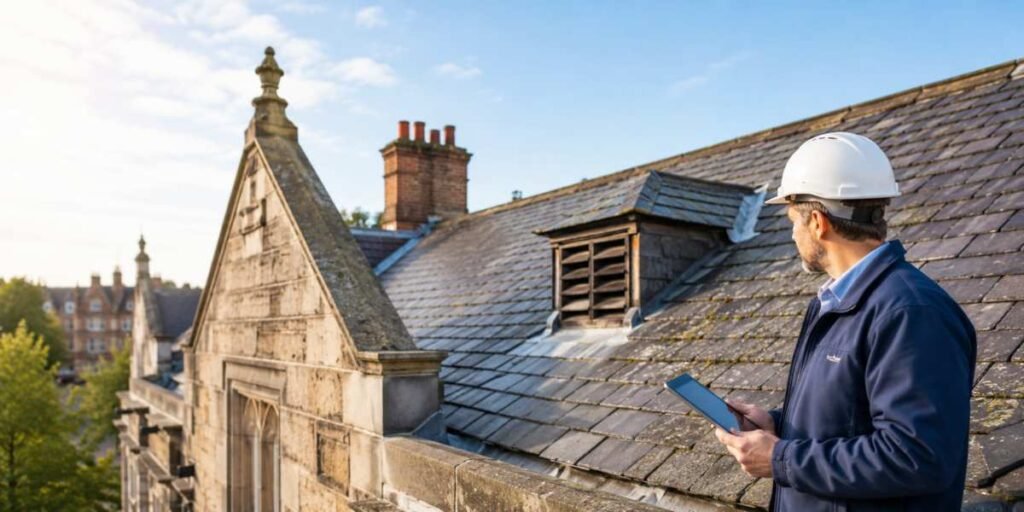
Unlike many modern roofing systems, traditional roofs were never intended to become airtight shells. They were built with natural airflow in mind, allowing moisture to move through the structure and escape before it could cause lasting damage. Interrupt that process with unsuitable materials, and the building may quietly begin collecting damp like an enthusiastic stamp collector.
Managing older commercial buildings, listed properties or heritage assets requires an appreciation of how these structures behave throughout the changing seasons. Rain, humidity and temperature shifts all influence how moisture travels, making ventilation just as important as the roof covering itself.
Historic Buildings Were Built to Handle Moisture Differently
Many older roofs rely on materials that naturally absorb and release small amounts of moisture. Timber, lime mortar, slate and traditional lead detailing all work together as part of a breathable system rather than acting as an impermeable barrier.This approach may sound unusual compared with modern construction methods, but it proved remarkably durable. Buildings constructed centuries ago often remain structurally sound because moisture has been allowed to escape instead of becoming trapped inside roof voids and supporting timbers.
Problems frequently arise when repairs focus only on stopping water from getting in while forgetting that existing moisture also needs somewhere to go. Installing impermeable membranes, replacing breathable mortar with hard cement or sealing every visible gap can unintentionally lock moisture inside the roof structure.
Water vapour is surprisingly persistent. If it cannot leave through its usual route, it will often find another, usually one that property managers would rather avoid.
Ventilation Does More Than Prevent Condensation
Ventilation is often associated with reducing condensation, but its role extends much further in historic buildings. Proper airflow regulates humidity, helps timber dry after periods of wet weather and reduces conditions that encourage fungal decay.Roof spaces need balanced ventilation rather than excessive airflow. Too little ventilation allows damp air to linger, while poorly planned alterations may create unwanted draughts that interfere with the building’s original performance.
Facilities managers overseeing multiple sites should remember that every historic building behaves slightly differently. A Victorian office conversion, an old church hall and a converted mill may all require completely different ventilation strategies despite appearing similar from ground level.
That is one reason experienced surveyors spend considerable time inspecting roof spaces instead of making assumptions from outside. A roof can look perfectly respectable from the street while quietly conducting its own indoor swimming lessons above the ceiling.
Choosing Materials That Work With the Building
Selecting replacement materials for an older roof should involve more than matching colour and appearance. Compatibility with the existing structure is often far more important than choosing the newest product on the market.Traditional slate, lead, lime mortar and appropriate timber repairs have remained in use for generations because they complement the movement and moisture characteristics of historic buildings. Introducing rigid or impermeable materials into an otherwise breathable roof can create stresses that gradually appear as cracked mortar, trapped damp or decaying timbers.
This does not mean modern products have no place. Many perform exceptionally well when specified correctly. The important question is whether they support the building’s natural moisture management rather than working against it. Every repair should be viewed as part of the entire roofing system instead of an isolated improvement.
A product brochure may promise permanent protection against every weather condition known to science, but the building itself usually has the final vote.
Maintenance Beats Emergency Repairs Every Time
Preventative maintenance remains one of the most effective ways to preserve historic roofing assets while controlling long-term costs. Small issues are rarely content with staying small.Regular inspections should include attention to areas such as:
- Damaged or slipped roof coverings.
- Lead flashings showing signs of movement or fatigue.
- Blocked gutters and rainwater goods.
- Evidence of condensation within roof spaces.
- Timber showing staining, softness or fungal growth.
Waiting until water reaches office desks or warehouse stock is rarely considered an efficient inspection method, even if it does provide a very clear indication that something has gone wrong.
Raising the Roof Without Raising Repair Bills
Historic roofs have survived decades, and often centuries, because their designers understood something that still holds true today. Buildings need to manage moisture, not simply resist it. Respecting that principle allows property managers to make better decisions about repairs, maintenance planning and material selection.Breathable construction, appropriate ventilation and compatible repairs work together to protect both the roof and the wider structure beneath it. When maintenance is approached with patience instead of quick fixes, older buildings continue doing what they have already demonstrated remarkably well for generations. They simply keep standing, quietly proving that sometimes the oldest ideas are still comfortably sheltering the smartest ones.
Article kindly provided by lumleyleadwork.co.uk