
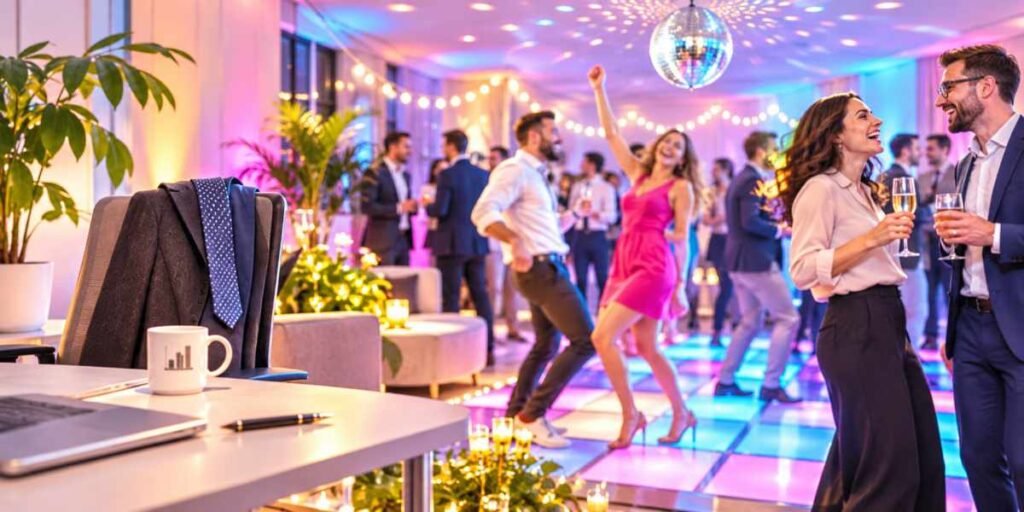
Transforming a professional gathering into an enjoyable social occasion requires more than providing refreshments and hiring a DJ. The visual environment establishes expectations, influences conversations and helps people temporarily step outside their professional roles.
Switching Off the Corporate Mindset
Office lighting is primarily designed for visibility, concentration and productivity. Bright, uniform illumination serves these purposes effectively but does little to encourage informal social interaction. When corporate events retain this lighting arrangement, employees may find it difficult to mentally disconnect from their working responsibilities.Introducing softer, warmer lighting creates a noticeable environmental distinction between work and leisure. Illuminated walls, decorative lamps and carefully positioned spotlights can make familiar surroundings feel surprisingly different. Employees may become more comfortable approaching colleagues outside their immediate departments, while conversations naturally move away from professional obligations.
Even the finance director might temporarily stop calculating the cost of every canapé.
Colour as a Social Ingredient
Different lighting colours can contribute to the emotional character of an event. Warm amber tones often create an inviting atmosphere, while subtle blues can establish a calmer, more sophisticated setting. Purple and pink accents can introduce a celebratory quality without making the venue feel excessively theatrical.Event organisers should consider how colours complement the intended activities. Networking areas benefit from gentle illumination that allows people to recognise faces and interpret expressions comfortably. Entertainment areas can accommodate more dramatic colour combinations and dynamic lighting effects.
Restraint is important. An enthusiastic lighting technician armed with seventeen colour settings can accidentally turn a respectable corporate gathering into something resembling an intergalactic emergency evacuation.
Effective colour selection should support the occasion rather than dominate it. A gradual transition from neutral lighting during formal presentations to richer colours during social activities can help attendees adjust naturally, establishing a comfortable separation between professional duties and personal enjoyment.
Giving the Dance Floor a Social Purpose
An illuminated dance floor does more than provide an attractive centrepiece. It establishes a clearly defined entertainment space where conventional workplace hierarchies can temporarily become less significant. Watching a senior executive attempt a complicated dance move can achieve more for interdepartmental relations than an entire afternoon of compulsory team-building exercises.Dynamic lighting encourages movement and creates a shared focal point. Employees who might otherwise remain seated with familiar colleagues have an additional reason to explore the venue and participate in activities.
However, participation should always remain voluntary. Providing comfortable seating areas with softer lighting allows less enthusiastic dancers to enjoy conversations without feeling excluded from the festivities.
Creating Different Social Zones
Corporate gatherings bring together individuals with varying personalities, preferences and social confidence. A single lighting arrangement rarely accommodates everyone effectively. Creating distinct zones allows attendees to choose environments that suit their comfort levels.Event organisers might introduce the following lighting arrangements:
- Warm, indirect lighting around seating areas to encourage relaxed conversations.
- Dynamic coloured lighting around entertainment spaces to encourage participation.
- Moderate illumination around refreshments to support casual encounters.
- Gentle decorative lighting in quieter areas for attendees who prefer smaller gatherings.
Timing the Transformation
Lighting changes can help communicate the progression of an event without requiring constant announcements. Brighter illumination during speeches maintains attention, while gradually dimming overhead lights signals the beginning of informal entertainment.This approach allows the atmosphere to evolve naturally. Nobody particularly enjoys being instructed to relax by someone holding a microphone and a clipboard.
Seeing Colleagues in a Different Light
Well-planned lighting can help employees discover aspects of their colleagues’ personalities that rarely surface during working hours. Shared experiences outside conventional professional settings can encourage stronger relationships, improve mutual understanding and contribute to a more approachable workplace culture.The objective is not simply to make a venue look impressive. It is to create surroundings where people feel comfortable being themselves, without the constant visual reminders of professional expectations. Sometimes, improving workplace relationships begins with something as straightforward as finding the right dimmer switch.
Article kindly provided by southwestdiscosdirect.com