
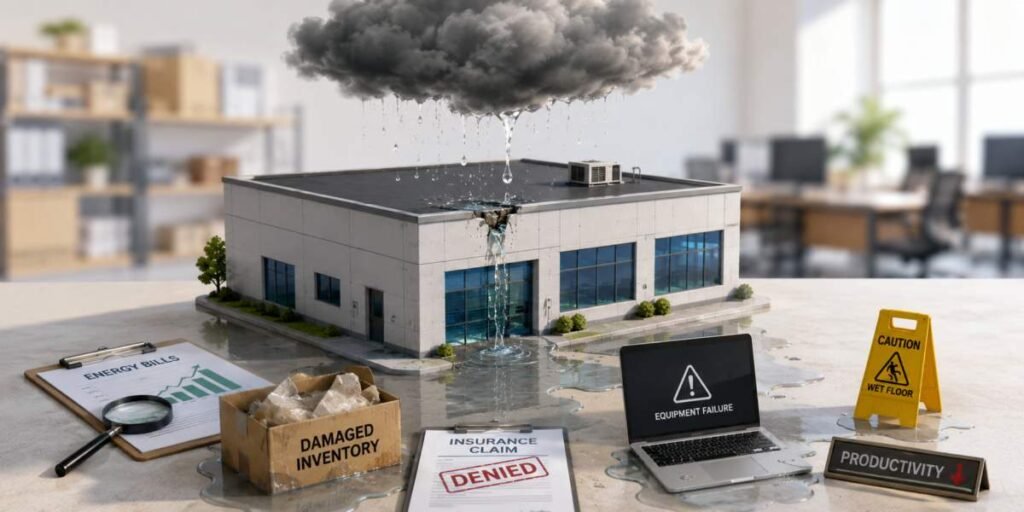
Why Tiny Defects Become Large Bills
Commercial roofs are often broad, flat or low-sloped, which means water has more time to linger, explore and find its way into weaknesses. A cracked seal around a vent, a small puncture in a membrane or blocked drainage may not seem urgent on Monday. By Friday, after rain, sun, wind and temperature changes have all had a vote, that tiny defect may have expanded into insulation damage or hidden moisture beneath the surface.Once water enters the roofing system, it does not always appear directly below the entry point. It may travel along beams, insulation layers, decking or service penetrations before finally revealing itself somewhere dramatic, such as above the accounts printer during payroll week. This is why waiting for visible indoor damage is a poor maintenance strategy. By the time water shows itself inside, the repair may already involve more than the outer roof surface.
Energy Costs Can Rise Without Much Warning
Wet insulation is one of the quietest budget thieves in a commercial building. Roofing insulation is designed to help regulate indoor temperature, but once it absorbs moisture, its performance drops. Heating and cooling systems then work harder to maintain comfort, which can increase energy bills month after month.Facility managers may notice that certain areas feel warmer, colder or more humid than others. Staff may begin adjusting thermostats as if they are cracking a safe. Meanwhile, the real issue may be above them, hidden inside a roofing system that is no longer performing properly. Small roof defects can therefore create ongoing operational costs long before anyone approves a formal repair.
Inventory And Equipment Are Often First In Line
For businesses that store products, materials, documents or machinery, even a minor roof leak can create serious losses. Water can damage packaging, stain stock, corrode metal parts, affect electronics and create conditions where mould becomes a concern. A single drip over the wrong shelf can turn sellable inventory into a very sad modern art installation.Commercial buildings often contain expensive equipment, from manufacturing machinery to computers, refrigeration units and electrical panels. Moisture near these assets can lead to repairs, downtime or replacement costs. The roof may seem far away from day-to-day operations, but when it fails, it can reach almost every part of the business beneath it.
Staff Productivity Feels The Effects Too
Employees work best in environments that are comfortable, safe and free from distractions. A leaking roof can interrupt all three. Buckets scattered across walkways, damp ceiling tiles, musty smells and temporary work relocations all chip away at productivity. While none of these interruptions may seem disastrous on their own, together they create a workplace that feels less organised and more reactive.There are also legitimate safety concerns. Wet floors increase the risk of slips, damaged ceiling materials can become hazards if left unchecked, and persistent moisture can contribute to indoor air quality problems. Staff members should be focused on serving customers, completing projects or operating equipment, not wondering whether the next raindrop has their desk on its itinerary.
Insurance Claims Become More Complicated
Many business owners assume insurance will simply cover roof-related damage whenever it occurs. Unfortunately, insurers often distinguish between sudden, unavoidable events and damage that developed because maintenance was neglected. If inspections have been skipped or known issues ignored, a claim may become far more difficult to support.Maintenance records, inspection reports and repair invoices demonstrate that a building owner has taken reasonable steps to care for the property. Without documentation, discussions following a major leak can become uncomfortable. Insurance companies naturally want evidence that preventable defects were not allowed to worsen over months or years.
Regular inspections also make it easier to identify whether storm damage is genuinely new or simply the latest chapter in a much older roofing problem.
Practical Maintenance That Saves Money
Preventive maintenance usually costs far less than emergency repairs. Rather than waiting until water enters the building, facility managers can establish straightforward routines that keep roofing systems in better condition throughout the year.- Schedule professional roof inspections at least twice each year and after major storms.
- Keep roof drains, gutters and outlets free of leaves, debris and standing water.
- Repair damaged flashing, seams and membrane punctures while they are still small.
- Document every inspection and repair for maintenance planning and insurance purposes.
- Encourage maintenance staff to report ceiling stains, unusual humidity or new roof concerns immediately.
Raising the Roof Without Raising Expenses
Commercial roofs spend every day facing sunlight, rain, wind, temperature swings and airborne debris without asking for applause. Giving them routine attention is far less costly than asking them to perform miracles after years of neglect. Small defects have a remarkable ability to grow quietly while increasing operating costs in ways that are easy to overlook until the invoices begin arriving.Businesses that invest in regular inspections and prompt repairs often enjoy lower long-term maintenance costs, more reliable energy performance, better protection for equipment and inventory, and fewer operational interruptions. A little attention paid at the right time keeps the roof doing what it does best—remaining so wonderfully uninteresting that nobody has a reason to look up during the next rainstorm.
Article kindly provided by cjroofing-r.com