
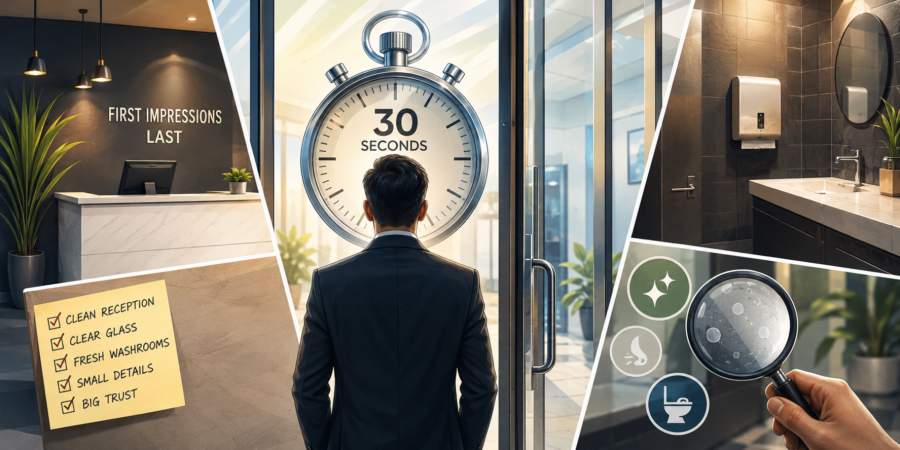
Within the first 30 seconds of entering your business, clients are already building a story about how you operate. They are judging reliability, attention to detail, consistency, and even pricing expectations before anyone shakes hands or offers bottled water that tastes faintly like refrigerator onions.
A polished reception area suggests organization. Smudged glass doors suggest neglect. Overflowing trash bins quietly whisper, “Nobody is really steering this ship.” Customers may never say these things aloud, but their brains are filing reports at incredible speed.
The uncomfortable reality is that trust is often formed through tiny visual clues that seem unrelated to the actual service being sold. A law firm might have brilliant attorneys, but fingerprints smeared across the front entrance can still create hesitation. A luxury salon can advertise premium care all day long, but stained grout near the waiting area undermines the message before the appointment even starts.
Reception Areas Speak Before Employees Do
Reception spaces function like movie trailers. Clients assume the rest of the business matches whatever appears in the opening scene.That does not mean every business needs marble floors and furniture that resembles modern art sculptures nobody is allowed to sit on. Cleanliness matters far more than extravagance. A modest reception area with spotless surfaces and fresh air creates confidence immediately.
Several details consistently affect customer perception:
- Dust collecting on shelves or décor
- Sticky counters or fingerprints on desks
- Scuffed floors near entrances
- Dead plants pretending to still participate in society
- Lingering odors from food, mildew, or cleaning chemicals
Serious businesses treat reception maintenance as part of customer communication, not a background chore. Cleanliness tells clients their experience matters. Neglect tells them they are entering an environment where details get missed.
Glass Surfaces Create Quiet Judgments
Glass carries unusual psychological weight in commercial spaces. People associate clear, spotless glass with professionalism because it signals ongoing upkeep.Dirty glass works differently. Smears, streaks, and fingerprints catch light constantly, which means customers subconsciously keep noticing them even while trying to focus elsewhere. It becomes visual static.
Front doors are especially important because clients physically interact with them. If someone grabs a handle surrounded by cloudy marks and grime buildup, the business instantly feels less polished. That reaction happens before the receptionist even looks up from the computer screen.
Conference rooms matter too. Smudged interior glass walls suggest rushed preparation. Clients may wonder what else receives the same level of carelessness.
Natural light also changes perception. Clean windows make interiors feel brighter, larger, and more welcoming. Dirty windows flatten the atmosphere and make spaces appear tired. It is remarkable how quickly sunlight turns from “pleasant and professional” to “abandoned shopping center energy” depending on window maintenance.
Washrooms Reveal Operational Standards
Nothing exposes a business faster than the washroom.Clients may forgive a crowded lobby or slightly worn furniture. They become far less forgiving when faced with empty soap dispensers, damp paper towels scattered across the floor, or sinks decorated with mysterious water spots that seem to have survived several presidential administrations.
Washrooms shape trust because customers view them as private indicators of how a business operates when nobody is actively watching. A spotless restroom suggests discipline behind the scenes. A neglected one raises concerns about broader standards.
Some business owners underestimate how strongly this affects client confidence. Yet many customers quietly connect restroom cleanliness to service quality, safety, and competence.
Medical offices, restaurants, hotels, salons, and retail businesses face even greater scrutiny because hygiene directly relates to the customer experience. A poorly maintained washroom in these industries can quietly destroy repeat business.
Small Maintenance Problems Grow Into Big Assumptions
Clients rarely isolate one issue. They connect visible problems together and form broader conclusions about the business itself.A flickering lightbulb near the entrance may seem harmless to staff members who stopped noticing it months ago. To a first-time visitor, it can signal delayed maintenance, weak oversight, or cost-cutting in the wrong places. Pair that with dusty vents and stained carpeting, and suddenly the business feels disorganized even if operations are actually excellent.
This is why cleanliness and upkeep should never be treated as separate categories. Customers see them as one combined message.
Pay attention to overlooked details like:
- Chipped paint around doorframes
- Burned-out lights in hallways
- Wobbly waiting room chairs
- Water stains on ceilings
- Dust buildup around vents and corners
That may sound unfair. It is also completely normal human behavior.
People use environmental clues to evaluate risk constantly. Customers entering unfamiliar businesses are searching for reassurance, even when they do not realize it consciously.
Employees Notice More Than Managers Think
Cleanliness does not only affect customers. Staff members absorb the condition of a workplace every day, and it influences morale more than many business owners realize.A consistently clean environment communicates standards. Employees tend to take greater pride in spaces that appear maintained and respected. Messy surroundings often create the opposite effect. Once clutter and grime become normalized, accountability weakens across other areas too.
Nobody becomes inspired by a breakroom microwave that looks capable of developing its own weather system.
Businesses with strong first impressions usually build routines instead of relying on occasional deep cleaning marathons before important meetings. Consistency matters more than dramatic efforts once every few months.
Serious improvements often come from simple systems:
- Daily entrance inspections
- Scheduled glass cleaning
- Regular washroom checks throughout the day
- Quick clutter removal before appointments
- Immediate attention to odors or spills
Dust Settles but Reputation Shouldn’t
Customers form opinions quickly because businesses compete for attention in environments filled with alternatives. A client who feels uncertain during the first visit may never schedule a second one. Often, the business never learns why.That is what makes cleanliness so deceptively powerful. It operates quietly in the background while influencing trust at nearly every stage of the customer experience.
A spotless entrance will not rescue poor service. However, poor presentation can absolutely weaken strong service before it has the chance to prove itself.
The businesses that leave lasting positive impressions usually understand one important thing. Professionalism is not limited to presentations, branding, or sales language. It appears in polished glass, fresh-smelling rooms, clean washrooms, organized counters, and details handled before clients even arrive.
People notice care long before they hear promises about it.
Article kindly provided by cinderellacleaning.co.uk