
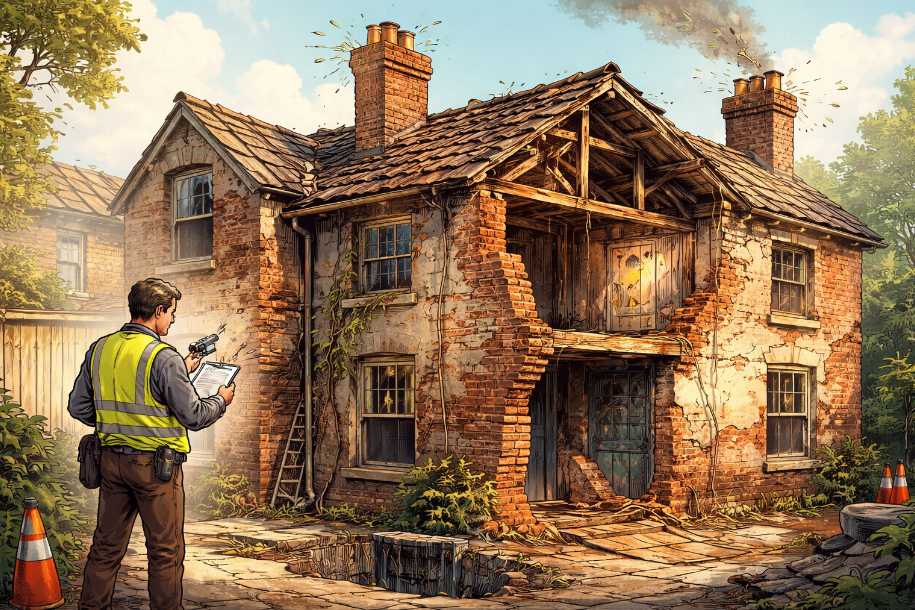
That is part of their charm, and part of their menace. For property investors and portfolio managers, older stock can offer strong locations, attractive yields, and architectural character that newer buildings often struggle to imitate. It can also deliver a catalogue of hidden risks that do not care how polished the entrance hall looks in the sales brochure. A fine cornice does not cancel out rotten joist ends. A handsome façade does not negotiate with water ingress.
Managing older properties well means learning to read small warnings before they become large invoices. The point is not to treat every crack like a disaster movie. It is to understand which signals deserve calm attention, which need urgent investigation, and which are simply part of a building settling into old age with a bit less dignity than it once had.
Movement means something even when it means very little
Cracks are usually the first thing people notice, partly because they are visible and partly because nothing encourages dramatic speculation quite like a jagged line above a window. Not every crack points to structural failure. Some reflect seasonal movement, historic settlement, or minor shrinkage in finishes. Others suggest a more serious pattern involving foundation movement, thermal expansion, failed lintels, or long-term moisture problems weakening the structure around them.The useful question is not whether a crack exists, but how it behaves. Is it recent. Is it widening. Does it run diagonally from openings. Are doors sticking nearby. Are skirting boards separating from walls. One crack may be cosmetic. A pattern may be evidence.
For portfolio managers, repeated movement issues across multiple older assets can also indicate a maintenance blind spot. Leaking drains, defective gutters, and unmanaged vegetation near foundations can all contribute to instability over time. Trees are lovely until they start acting like freelance geotechnical consultants.
This is where disciplined inspection matters. Record locations. Photograph changes. Compare previous reports. A building rarely wakes up one morning and decides to become difficult without having dropped a few hints first.
Moisture does its best work when nobody is paying attention
Water is patient, quiet, and ruinously effective. In older buildings, moisture-related defects often sit behind more obvious cosmetic finishes. Peeling paint, stained ceilings, crumbling plaster, and a persistent musty smell are not isolated annoyances. They are clues. Left unresolved, moisture can drive timber decay, corrode embedded metal, reduce insulation performance, and create conditions that undermine both tenant comfort and asset value.Serious problems often begin with ordinary failures.
- Blocked or poorly aligned gutters
- Defective roof coverings or flashings
- Bridged damp proof courses
- Inadequate subfloor ventilation
- Hard modern finishes trapping moisture in older walls
For investors, the risk is cumulative rather than theatrical. Moisture defects can depress value, trigger tenant complaints, increase repair costs, and produce secondary failures that spread well beyond the original source. Finding the source early is rarely glamorous, but it is much cheaper than replacing structural timber after months of polite denial.
Timber rarely fails suddenly it usually complains first
Timber is one of the quiet heroes of older buildings. Floor joists, roof structures, lintels, and framing members often carry loads faithfully for more than a century. Problems usually appear only when moisture, insects, or poor ventilation give decay the opportunity to move in like an unwelcome long-term tenant.Rot rarely begins with drama. Instead, there are subtle signals. Slightly springy floors. Skirting boards that feel softer than expected. A faint earthy smell in confined spaces. Small areas of crumbling timber at joist ends or around damp masonry.
Portfolio managers should pay particular attention to areas where timber meets masonry. Joist ends embedded in damp walls are especially vulnerable. Roof timbers around leaking valleys or chimneys can also suffer slow deterioration long before any visible sag appears in the roofline.
Inspection regimes should include periodic checks in roof voids and subfloor spaces. These are not glamorous locations, but they often reveal problems months or years before those problems appear in the occupied parts of a building. A careful look today can prevent a future tenant from discovering the issue when their living room ceiling begins to experiment with gravity.
Roofs age like athletes who forgot to stretch
Roofs in older buildings rarely collapse without warning. What they do instead is deteriorate gradually while continuing to perform just well enough to avoid immediate attention. Slipped tiles, cracked flashings, eroded mortar, and blocked valleys slowly compromise the system that keeps weather outside where it belongs.From street level, a roof may look respectable. Up close, the story can be rather different.
- Loose or displaced roof coverings allowing water penetration
- Corroded flashings around chimneys and abutments
- Deteriorated ridge mortar
- Blocked drainage points causing water to back up beneath tiles
- Structural timber fatigue in long-spanning roof members
Outdated materials can create modern liabilities
Many older properties contain materials that were once considered perfectly acceptable but now present regulatory or maintenance complications. These might include aging electrical systems, early insulation materials, deteriorating plumbing components, or construction products that no longer meet modern safety expectations.For portfolio managers, the challenge is not only physical condition but also compliance. Tenants expect buildings that meet contemporary standards for safety, comfort, and energy performance. Outdated systems can affect insurance, financing, tenant retention, and operating costs.
Asset planning therefore benefits from understanding not only what is currently failing but what is approaching the end of its practical life. Scheduled replacement programmes are far easier to manage than emergency repairs triggered by sudden system failure. A building that receives thoughtful upgrades gradually tends to remain far more cooperative than one forced into rushed improvements after something dramatic happens.
Foundations for smarter portfolio management
Older buildings rarely behave unpredictably. What they do instead is communicate in small signals that reward attentive management. Cracks widen slowly. Damp appears before decay. Roof coverings loosen before leaks become visible indoors.Investors and portfolio managers who treat inspections as a strategic tool rather than a procedural formality gain a significant advantage. Early identification allows repairs to remain targeted, budgets to stay predictable, and tenants to enjoy buildings that function as intended rather than improvising their own ventilation systems through unexpected ceiling openings.
Experience shows that well-maintained older properties can remain highly resilient assets. Character, location, and solid original construction often provide long-term value that newer developments struggle to match. The key is disciplined observation and a willingness to act before minor signals grow into structural negotiations with gravity.
Older buildings are not fragile antiques. They are durable systems that simply expect attention now and then. Ignore the signals, and the building will eventually raise its voice. Pay attention early, and it will usually remain a reliable member of the portfolio rather than its most creative expense.
Article kindly provided by hbsurv.co.uk