
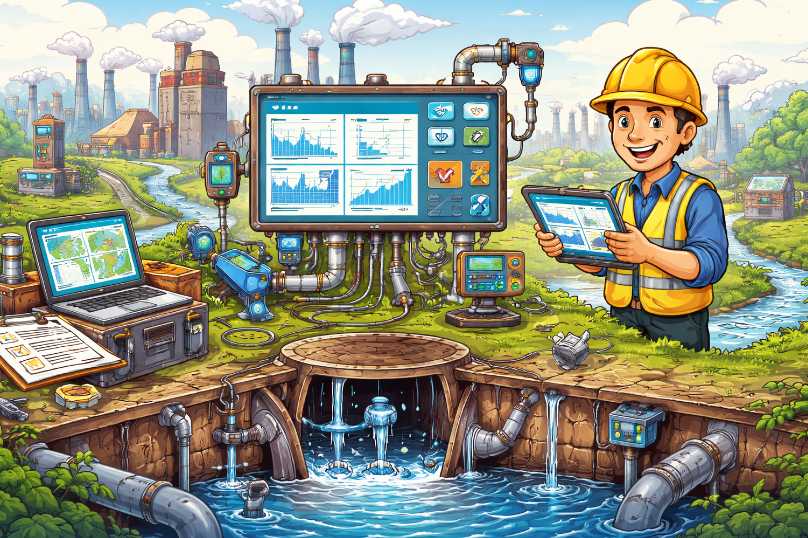
Start by Mapping Assets Like You Mean It
Before KPIs and sensors and dashboards, there’s a simpler question: what exactly is being monitored? A structured plan begins with an asset map that’s specific enough to be useful, but not so detailed it becomes a hobby. The goal is to document every component that can clog, corrode, settle, leak, or overflow—and then organize it so anyone can find it without needing a sixth sense.Build a drainage inventory that includes inlets, catch basins, trench drains, manholes, oil-water separators, sumps, lift stations, outfalls, retention ponds, and any “temporary” piping that has been temporary since 2019. Tie each asset to a location, an ID, and a clear description of what it serves (loading bay runoff, chemical storage containment, parking lot stormwater, and so on). Include the direction of flow and where it discharges. If discharge points are unclear, that’s not a fun mystery; it’s a risk register wearing a disguise.
Add context layers to the map:
- High-risk zones (chemical handling, bulk storage, washdown areas)
- Flood-prone low points and known “puddling champions”
- Critical production areas where water and uptime should never meet
- Regulatory boundaries (permit-covered outfalls, sampling points)
Set KPIs That Catch Trouble Early
Monitoring without measurable targets is just organized worrying. KPIs turn drainage from an afterthought into a managed system with thresholds, trends, and triggers. The trick is to pick indicators that are both practical to collect and predictive of failure.Start with performance KPIs that reflect real outcomes:
- Time-to-drain after a rain event (by area)
- Number of overflow incidents per quarter
- Sump pump run-time anomalies (baseline vs. current)
- Sediment or debris accumulation rates in key inlets
- Inspection completion rate (on-time, documented, signed)
- Outfall condition score (sheen, turbidity, odor, visible solids)
- Corrective action closure time
Choose Sensors and Checks That Fit the Site
A structured plan doesn’t force every site into the same technology stack. Some facilities need real-time instrumentation; others need disciplined rounds and reliable documentation. Most benefit from a hybrid approach.Sensors make sense where conditions change quickly or consequences are high. Examples include:
- Level sensors in sumps, lift stations, separators, and critical manholes
- Flow meters at key discharge lines or outfalls
- Rain gauges to correlate weather with performance
- Leak detection in containment areas with sensitive materials
Periodic checks remain essential, especially for debris, structural integrity, and “things growing where water should be moving.” Use standardized inspection forms with clear pass/fail criteria and photo requirements. Assign frequencies based on risk: weekly for critical drains near production, monthly for general stormwater assets, seasonal for ponds, and post-storm checks when rainfall exceeds a defined trigger.
Build a Response Workflow Before You Need It
Data without action is trivia. A proactive drainage monitoring system must define what happens the moment a threshold is crossed or an inspection flags a concern. This is where structure prevents chaos.Create a simple escalation ladder. For example:
- Level 1 – Minor deviation, handled by maintenance within 48 hours
- Level 2 – Performance impact likely, supervisor notified and corrective work scheduled immediately
- Level 3 – Active overflow or compliance risk, operations and EHS alerted, containment initiated
Review Trends Like You Review Production Metrics
Drainage data deserves the same seriousness as throughput and downtime reports. Quarterly reviews should examine:- Recurring hotspots or repeat corrective actions
- Shifts in pump runtimes or flow patterns
- Seasonal vulnerabilities
- Inspection completion gaps
On the compliance side, consistent records show regulators that oversight is systematic, not improvised. Inspection logs, calibration records, and corrective action histories demonstrate intent and control. That documentation can transform a tense site visit into a straightforward review. Regulators appreciate clarity almost as much as they appreciate clean outfalls.
Early Detection Keeps Operations Flowing
Industrial downtime often starts with something small and wet. A blocked trench drain floods a loading area. A failed float switch overfills a sump. An unnoticed crack in a manhole allows infiltration that overwhelms downstream capacity. Each event has a root cause that likely showed up as a minor deviation weeks earlier.Early detection shifts the timeline. Instead of emergency pumping and production shutdowns, you schedule a repair. Instead of environmental reporting and potential penalties, you document a minor issue resolved within hours. Instead of scrambling to contain runoff, you prevent the overflow entirely.
There is also the matter of reputation. Contractors, auditors, and customers notice when a site looks controlled. Standing water and improvised hoses do not communicate excellence. Clean, functional drainage does—quietly, without fanfare, which is exactly how it should operate.
Keeping the Flow Under Control
A proactive drainage monitoring system is not complex for complexity’s sake. It is structured awareness. Map the assets. Define measurable KPIs. Combine sensors with disciplined inspections. Establish clear response pathways. Review trends and adjust before small issues escalate.When drainage is managed deliberately, it stops being an afterthought and becomes part of operational resilience. Water will always move. The only real question is whether it moves according to your plan—or according to gravity’s sense of humor.
Sites that invest in structured monitoring rarely make headlines for flooding, spills, or compliance violations. Their systems simply work. And in industrial operations, systems that quietly do their job without drama are worth far more than they appear on paper.
Article kindly provided by drainage-plumbing.co.uk